
Among many imposter Messiahs, Jesus of Nazareth had the bona fides.
Men before him like Judah the Galilean and Theudas, had roused up armed rebellions against the Romans, fueled by apocalyptic visions. Their insurrections cost them and their followers their lives, with no resurrections taking place.
Nicodemus, a Pharisee and member of the Sanhedrin, recognized that Jesus was something altogether different. His astounding miracles and incomparable insight into the scriptures were a far cry from the bloody revolts of other pretenders.
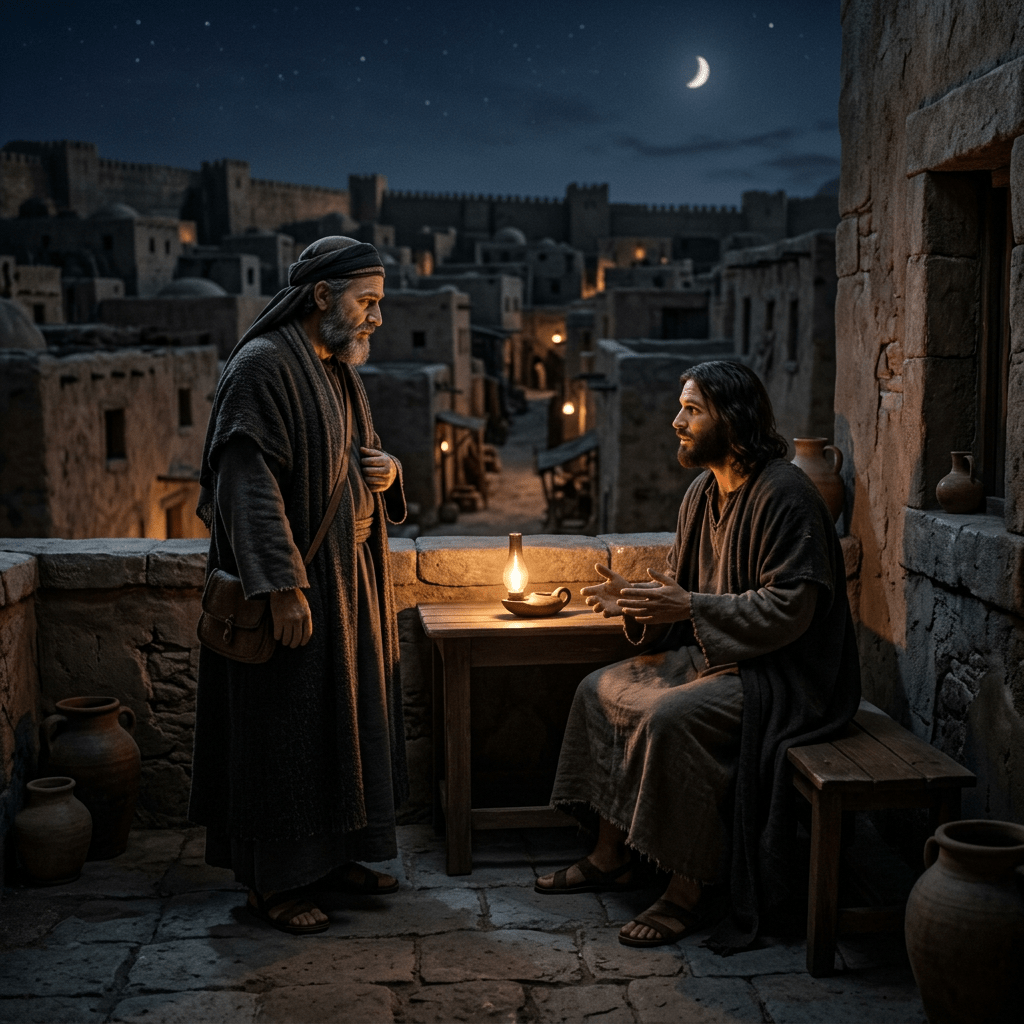
Although it wasn’t fitting and proper for a Pharisee and learned scholar like him to consort with a Johnny-come-lately from Nazareth, he did anyway.
He received a one-on-one audience with Jesus in the night. His discretion likely had two motives. One, Jesus had a busy public ministry and His time was not His own during the day. Two, a member of the Sanhedrin like Nicodemus was risking his standing and position by seeking out Jesus. He would also look like a fool if this Jesus turned out to be another wild-eyed zealot.
His fascination held steady nonetheless. Nicodemus said to Jesus, “Rabbi, we know that you are a teacher come from God, for no one can do these signs that you do unless God is with him” (John 3:2).
His use of “we” makes me wonder if Nicodemus was also being used as a secret backchannel, representing a faction of the Pharisees and Sanhedrin who held out hope that Jesus was the real deal and wanted to question him further. The Sanhedrin would have never agreed to do this in an official manner. Many of them either did not view him as legitimate, or worse, realized that he very well could be the Christ but did not want to lose their power.
Nicodemus’s bold opening statement, “We know you are teacher who has come from God,” shows that he had a genuine curiosity. In response, Jesus systematically lays out the Gospel for the rest of John 3. Nicodemus quickly realized that his understanding of the scriptures was shallow compared to the man who sat before him.
Instead of dismissing Jesus, he pressed further and asked questions. While we don’t get an explicit confirmation that Nicodemus confessed Christ was a Messiah, the Gospel of John later describes a Pharisee who was willing to put everything on the line for Jesus.
In John 7, he speaks out against the attempted arrest of Jesus at the orders of the Sanhedrin, saying, “Does our law judge a man without first giving him a hearing and learning what he does?” (John 7:51).
Even more significant is where he went after Jesus was crucified. Instead of sinking into the shadows, he accompanied Joseph of Arimathea (a fellow member of the Sanhedrin) to prepare Jesus’ body for burial. Joseph had requested the body from Pilate and Nicodemus brought 75 pounds of spices for the embalming. Both men’s actions would certainly not have earned them adulation with the Sanhedrin.
Always pay attention to those who are there when it’s most convenient to leave. It’s for that reason that I believe Nicodemus became a committed follower of Christ post-resurrection. Like everyone else, he would have had to believe that Jesus had actually risen from the dead, but given that Jesus had told him directly, “The Son of Man must be lifted up,” I imagine that the Holy Spirit caused him to remember those words and make the connection.
Earlier in his ministry, Jesus had allowed him to cautiously “peek around the corner” and wrestle through the scriptures in conversation. While conversions like Saul’s Damascus road experience are (literally) flashy, many others are a slow burn like Nicodemus.
Nicodemus is an important reminder that God rewards those who diligently seek him. It’s also a warning that all of us must continue to search the scriptures and use the minds that God has given us, even amidst a digital revolution that claims all “truth” is just one prompt away.
 replenishstories.com