
A casual observer would wager “Tombstone Joe” an enemy of Jesus.
Incredible wealth.
Holder of political office.
Esteemed in the community.
But when the scribes, chief priests, and members of the Sanhedrin queued up near the cross to badmouth Jesus, Tombstone Joe didn’t show.
His colleagues, men of decorum, couldn’t ask for a more fitting spectacle. The blasphemer would be finished once and for all.
You who are going to destroy the temple and build it in three days, save yourself!
Come down from the cross, if you are the Son of God!
He saved others but he cannot save himself!
Let God deliver him now, if he desires him. For he said, “I am the Son of God.”
Although likely a member of the Great Sanhedrin, Tombstone Joe didn’t put his name behind Jesus’ execution.
Matthew 26:59 gives clues that the entire council was present the night Jesus was arrested and taken before Annas, then Caiaphas.
While false testimony and rigged cross-examinations flew across the room, Tombstone Joe kept his head and wouldn’t follow suit.
He wasn’t just any member of the council. Respect and notoriety trailed his name everywhere he went.
What possessed this man to refuse to move in lockstep with the high priest?
Tombstone Joe was looking for the kingdom of God and believed it had arrived in the ministry of Jesus Christ.
Rich, politically-connected, and prominent in Jerusalem, he represented what should have been the starter kit for an arch nemesis of the upstart preacher from Nazareth.
Yet he was a secret disciple of Jesus. And for most of Jesus’ ministry, he guarded his affiliation for fear of reprisals.
While the decision didn’t smack of courage, Tombstone Joe had a front row seat to the same men who plotted to kill Lazarus…after he was raised from the dead. What was he in for if his allegiance was discovered?
For a man who already cut his own tomb in a garden outside of Jerusalem, he demonstrated a sixth sense for self-preservation. But before I go coloring his character in shades of gutlessness, remember that he didn’t consent to Jesus’ show trial. Luke 23:50 also bears witness that he was a good and righteous man.
The politician in him was conflicted, cautious. The man of faith in him was something altogether otherworldly.
Here’s a guy who had navigated the treacherous political currents all the way through Jesus’ execution. And it appeared he would avoid most of the blowback. There might have even been an inkling of relief. Maybe this Jesus wasn’t who he said he was.
But Tombstone Joe did something outrageous after Jesus’ crucifixion.
According to the Gospel of Mark, he took courage and requested an audience with Pontius Pilate.
He was covering the cost of Jesus’ burial, and he wanted the body.
If Tombstone Joe had a chief of staff to advise him on political decisions, this would have been the idea the chief of staff argued against.
Again, Scripture is silent on this possibility, but imagine if he ran the decision past his advisor. The response would have been pragmatic and sharp in its conclusions.
“Joe, you’re nearly scot-free. You might lose a couple of merchant deals in Jerusalem and some clout in the council because you spoke up against his execution. Caiaphas certainly won’t be asking you to celebrate the Passover with him this time next year. But these things can be massaged.
Why are you throwing away your position by asking for his body? He’s gone, Joe. He might have been a prophet. But the Son of God?”
Like most men of character, Tombstone Joe decided to emerge from the shadows of the silent majority when it was least politically expedient.
Pontius Pilate confirmed Jesus’ death with a centurion, then granted the body to the Jewish council member.
Hours after his colleagues spit upon and humiliated Jesus, Tombstone Joe reentered the crucifixion site to clean up.
Jesus’ body was taken down from the cross, swollen, scarred, speared. The wound in his side likely exposed his entrails. Bear plucked, eyes lost of their spark, and skin washed out like peeled wallpaper, he was marred beyond recognition.
Who knows what Tombstone Joe thought in those moments? Did he ever hear of Jesus’ prophetic warning that the Son of Man would be handed over to the chief priests and crucified? If so, did he recall that the Messiah would rise again?
It’s also more likely Tombstone Joe felt he was mopping up after someone that could have been the Christ but was ultimately a letdown. Accompanied by Nicodemus, who brought seventy-five pounds of myrrh and aloes, he took Jesus’ body into his care.
Neither could have predicted that they were holding the flesh and bone remains of the most public spectacle in all recorded history—one that bore the holy justice of all mankind’s sin and triumphed over demonic principalities and powers.
A good rule for life: never forget those who show up when the body gets cold and the worst has already happened.
For all their cautiousness, Tombstone Joe and Nicodemus hung around after most of the diehard followers left.
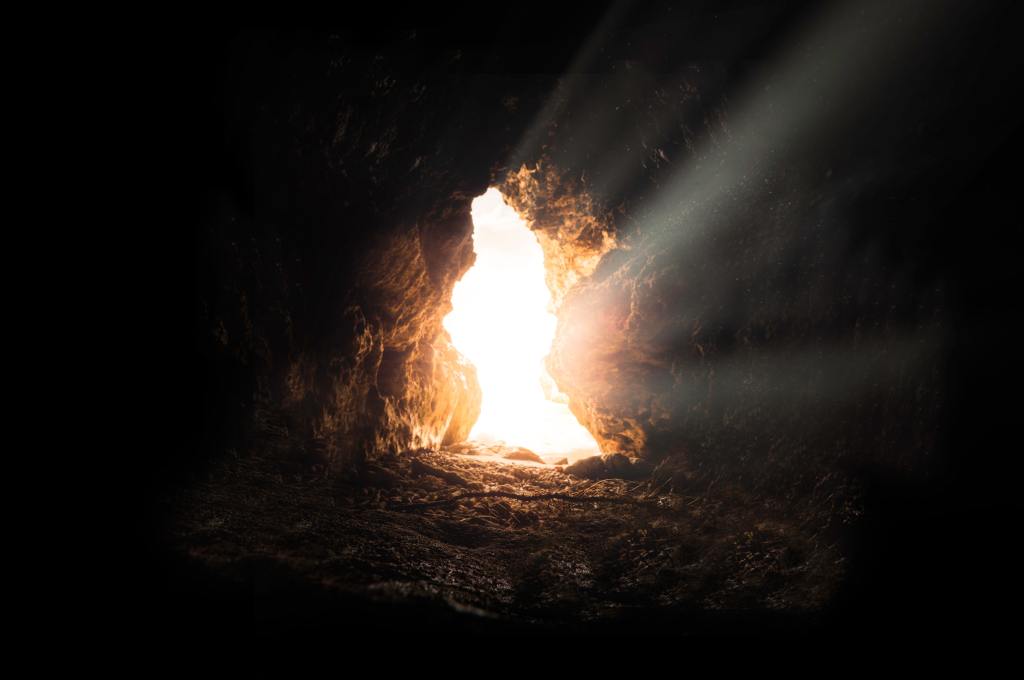
They wrapped Jesus’ body in a clean linen shroud, laid it in Tombstone Joe’s future resting place, and rolled a boulder in front.
The secret disciples became the funeral directors.
The decision was not without consequences. After getting word that Jesus had been properly buried, the chief priests and Sanhedrin would no doubt have taken note that Tombstone Joe had gone out of his way for the troublemaker from Nazareth. Crucified criminals didn’t qualify for a decent burial.
Then Sunday came.
As you know, Tombstone Joe has a rotten record when it comes to successful burials. (Hence the nickname for him.) Praise be, his hole-in-the-hillside was a three-day layover for the Messiah, an ancient Airbnb, if you will.
Joe doesn’t re-enter the Biblical record after Jesus’ resurrection. Still, he no doubt received the news that this Jesus of Nazareth was exactly who He said He was.
The rumors from the chief priests probably filtered back to him, too. If they paid off the guards to claim the disciples had swiped Jesus’ body from the tomb, then our friend Joe’s name probably came up in the gossip. Most would reason that the man who provided the burial site was in on the ruse, a splendid scapegoat.
But Tombstone Joe doesn’t seem like a man poised to slink back under disinformation. I’d like to believe he received the news of Jesus’ resurrection with joy, spoke with the disciples about His reappearances, and took comfort in the multiple confirmations.
Acts 1:3 reminds us that Jesus appeared over a period of 40 days.
Could Tombstone Joe have gotten a glimpse of his Savior on one of these occasions?
What was his life and career like after?
Did he leave the Sanhedrin or get kicked out?
I’ll leave the answers for heaven. But I’d argue he stayed on as a faithful follower.
By now, you know who I’m talking about.
After all, Joseph of Arimathea gave so much more than just a grave.
Enjoyed this story from start to finish?
Get bonus stories once a month when you subscribe to my complimentary newsletter, Supply Line. Sign up here.
Kevin Cochrane is the creator of Replenish, the site to resupply your faith with overlooked insights from Scripture-based stories. Share your thoughts by commenting below or dropping a line to kevin@replenishstories.com.
 replenishstories.com
Your details of Joseph of Arimathea really made me think about what happened. The chief priests, scribes etc turned him over to be crucified. Yet one of their own prepared Him for burial. His disciples did not. Very interesting to think about.
LikeLike