
Throughout downtown Boston, a certain Mr. Pink is popping up everywhere. He waves from rooftops, peers into large buildings, and suspends himself trees.
Mr. Pink is a huge sculpture on display as part of “Winteractive,” an outdoor art exhibition. Philippe Katerine, a French artist, actor, and singer, created the sculpture through a combination of steel cables, PVC piping, and blowers. Mr. Pink—or Monsieur Rose, as the sculpture is titled—is meant to add some colorful humor and bring a smile to Bostonians amid the bitter cold and raw, windy days.
When I first came across this article covering Mr. Pink in Smithsonian Magazine, it got my gears turning. Normally, I’m suspicious of modern art. I fluctuate between feeling like I’m either being scammed or too intellectually dense to comprehend the “subversive” meaning of the exhibit. I’m exposing my obvious lack of culture here, but I figured I should admit my conflict of interest.
The Connection to Evangelism
After reading about Mr. Pink, it reminded me of walk through nativities put on by churches and ministries across the country during the Christmas season. Those can be a powerful tool for the gospel. I also think there’s opportunity to adapt that approach on a smaller scale for the other 11 months of the year.
I lack the minimum viable ability to sculpt or paint, but here’s what I would do if I could. I would create a series of teddy-bear-sized dolls representing Biblical figures. Each would be left in public places and have a notecard or placard. The notecard would have the exhibit title, a short explanation of the character, and a QR code or website address that links to the full Bible passage and a message of salvation.
Here’s the first character I would create: Zacchaeus.
Why? Americans are obsessed with true crime. Look at how many popular shows, documentaries, podcasts and YouTube channels exist that cover everything from serial killers and financial scammers to celebrity trials and organized crime members.
Zacchaeus was a chief tax collector who worked on behalf of the Roman empire. It is also quite likely that he was a white collar criminal of the highest order.
In Jesus’ day, Jewish tax collectors brought in the funds from their fellow countrymen. Corruption was rampant, with many tax collectors overcharging and skimming the excess profits for themselves. While the Biblical text does not come right out and say that Zacchaeus did the same, it does note he was quite wealthy. Do you think his day salary got him there? And do you think he rose through the ranks to become chief collector without ever inflating the rates so he could profit? I’m highly skeptical.
Zacchaeus himself said to Jesus, “If I have cheated anybody out of anything, I will pay back four times the amount.” The big word there is “IF.” He could have meant that as “I’m subtly admitting I bamboozled people and because I’m repentant, I will restore what’s due to them.”
Or it could have been the plea of a righteous man saying, “If I’ve mistakenly overcharged anyone, I feel terrible and will make it right.”
Some scholars argue that the crowd grumbling at Jesus’ invitation to Zacchaeus was full of prejudice and that they assumed he was a sinner because of his position as tax collector.
That could be. But I lean toward the less generous reading, so we’ll move forward with the theory that Zacchaeus was corrupt.
The mind of a conman fascinates the public. Think of the attention that notorious figures like Bernie Madoff and Jordan Belfort (“The Wolf of Wall Street”) have garnered over the years. So my exhibit would play off that to grab attention, then route the story toward Zacchaeus’ story of repentance, restitution, and salvation through Jesus Christ.
Step into My Gallery
My exhibit would avoid mentioning the name “Zacchaeus” to add an air of mystery and navigate around any viewer’s pre-existing conceptions of the Biblical story.
Here is my mockup of Zacchaeus, or “Big Zeke.”
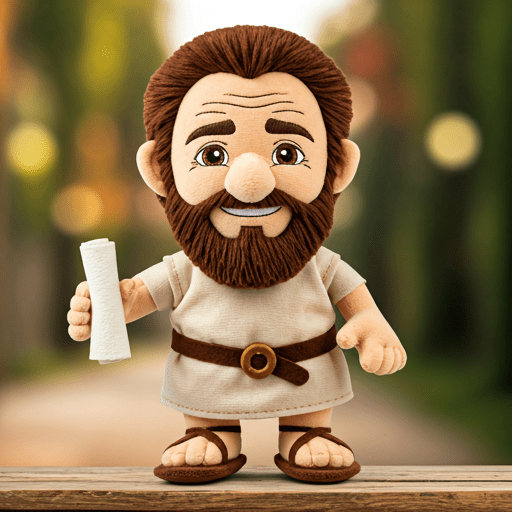
*Toy doll figure generated through Google Gemini AI technology.
His features look more like a Pittsburgh suburban dad than a first-century Jewish man, but you get the general idea. I am but a humble writer who is out of his depth in the art world.

Small notecard that would hang from the “Big Zeke” character.
If I were actually executing this project, I’d create a website page with either a video or article that tells the full story of Zacchaeus and shifts the focus from the true crime aspect to his genuine repentance and subsequent generosity.
This idea isn’t exactly cost-effective and some might say gimmicky, but humor me for a second. The real reason behind all this imagining is to get you thinking on the “What If?” question as it relates to evangelism.
Ask yourself, “What if I combined my favorite hobby or passion with evangelism? How would it look? What would I do to get the Gospel to that audience?”
Or you may get inspiration from a topic that doesn’t typically interest you, like I did with my sculpture example.
Sure, you may start out with unrealistic ideas. But you never know where it can lead to a very real, very effective idea to get the story of salvation out there.
 replenishstories.com