
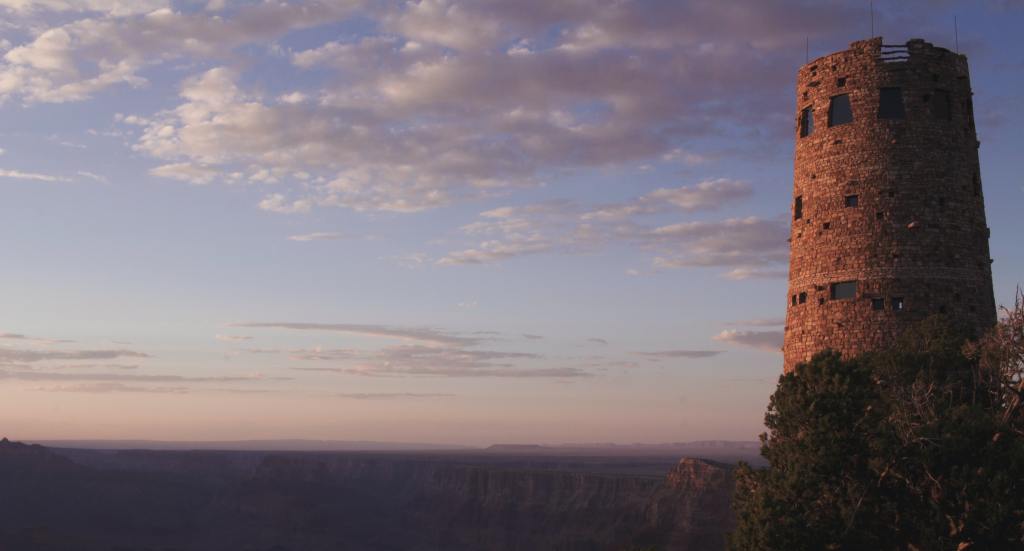
Habakkuk was a “minor” prophet with a major problem.
Everywhere he turned , treachery tapped his shoulder.
The judges in Judah took bribes and corrupted the law.
The wealthy deprived the poor of rightful wages.
The prophets pumped soothsaying oracles nowhere close to resembling the truth.
The people sacrificed to Baal in the high places and committed ritual prostitution. Some of their children passed through the flames on the altar to Molech. Even horses were presented to the sun god.
The book of Habakkuk opens with the prophet speaking out loud what many righteous men turned over in their minds.
O LORD, how long shall I cry for help, and you will not hear?
Or cry to you “Violence!” and you will not save?
Why do you make me see iniquity, and why do you idly look at wrong?
Destruction and violence are before me; strife and contention arise.
So the law is paralyzed, and justice never goes forth.
For the wicked surround the righteous; so justice goes forth perverted.
Habakkuk 1:24
Habakkuk couldn’t stomach the iniquity. Yahweh replies with an astounding prophetic message.
The jist? The Babylonians, an emerging political force, will sweep across the earth and take Assyria’s place as the supreme empire. And they will come for Judah.
The method of judgment didn’t please Habakkuk in the least.
The only thing worse than living in a society that’s rejected Yahweh is knowing that its conquerors will be those who never put any stock in Him to begin with.
Habakkuk rearranges the dialogue accordingly, asking Yahweh:
You who are of purer eyes than to see evil and cannot look at wrong, why do you idly look at traitors and remain silent when the wicked swallows up the man more righteous than he?
Is he then to keep on emptying his net and mercilessly killing nations forever?
Habakkuk 1:13, 17
Let’s set up a hypothetical scenario to bring the blood back to the situation.
Say your church rests in a rather “forward thinking” community, Sleepy Glen, that delights in nothing more than to indulge in the seven deadliest sins six ways to Sunday.
The local government is corrupt. The city planner takes kickbacks by handing out sweetheart real estate development deals to his cronies. The police chief dines weekly with the most notorious weapons trafficker in the tri-state area. And the mayor…well…he’s got sticky fingers when it comes to pension money for the local municipality (gambling problems, you see).
Your church is also conflicted. The elders possess less spine than a scarecrow. Sound doctrine never made it inside the four walls. The immorality reaches 1 Corinthians 5 levels.
But there’s a remnant of faithful believers, and as grace would have it, you’re one of them. You and the church pray without ceasing for God to root out the sin and restore a right standing before Him.
The church happens to have a bell tower. You go up there from time to time and pray. During one of these sessions, you ask a few pointed questions about the state of Sleepy Glen. Yahweh delivers a prophetic “Thus sayeth” word. It turns out that your community will receive a return to right order, but not as you’d imagine.
A motorcycle gang called The Brothers Grim is going to burn rubber from another state and take over Sleepy Glen. K-bar knives, brass knuckles, and lots of firearms with filed-off serial numbers will get a workout.
They won’t spare your church, either. God makes you well aware that those who survive will be pushed out and forced to relocate to a shantytown of scrap metal houses and do-it-yourself living quarters.
Oh, and by the by, no one even has this newfangled biker gang on his radar. Distant and undefined, everyone assumes biker gangs like The Hells Angels and their lesser known ilk are relics of Americana.
Take it another leather jacket further.
God instructs you to deliver this prophetic message to the entire community, church included. When done, others will assume you’re trying to get attention or build a social media following off a red herring. Plenty in the church will consider you a disruption, if not an outright looney.
But there’s no squirming out of taking action, no sliding aside the conviction with a carefully crafted text to your pastor that “I need to look after me and do some work on myself.”
Feel anything close to Habakkuk yet?
No? You’re a hard case but worth the extra few paragraphs, then.
Let’s say there’s an elderly couple you look up to at this church. Mike and Millie. Mike is the old firebrand who never shied away from street preaching and is a doting grandfather of six.
Millie is one of those matriarchs without whom no church luncheon could stand on its on two dining tables. More important, she practiced what she preaches about raising up a godly household. Mike taught you in childhood Sunday school once upon a time, and Millie has lifetime leverage because she changed your diapers in nursery.
Although not related by blood, they take an interest, love you dearly, and give extra praise that has you blushing to your toes.
Now open the heavenly mail for them, in the same vein as Habakkuk.
Watch their faces grow grave, realizing Sleepy Glen is going to get it from The Brothers Grim.
Swap out The Brothers Grim biker gang for Babylon and tell me what you see:
For behold, I am raising up the Chaldeans,
that bitter and hasty nation,
who march through the breadth of the earth,
to seize dwellings not their own.They are dreaded and fearsome;
their justice and dignity go forth from themselves.Their horses are swifter than leopards,
more fierce than the evening wolves;
their horsemen press proudly on.
Their horsemen come from afar;
they fly like an eagle swift to devour.They all come for violence,
all their faces forward.
They gather captives like sand.At kings they scoff,
and at rulers they laugh.
They laugh at every fortress,
for they pile up earth and take it.Then they sweep by like the wind and go on,
Habakkuk 1:6-11
guilty men, whose own might is their god!
Our hypothetical scenario is about a tenth of what Habakkuk faced.
Hundreds of years later, Babylon would earn its place in the New Testament as the symbol of debauchery in the face of God. The actual Babylon didn’t earn that reputation on a strong marketing plan and plugged-in media contacts. They gobbled up territory, acquired immeasurable wealth, and indulged in every lust imaginable.
Heated as any prophet could be, Habakkuk replies in the first verse of chapter two:
I will take my stand at my watchpost
And station myself on the tower
And look out to see what he will say to me
And what I will answer concerning my complaint.
His watchtower was a piece of prime real estate to clear the air with Yahweh. Really, it was the other way around. Yahweh grasped Habakkuk, drawing Him into the deeper workings of His sovereignty.
Throughout chapter two, Yahweh responds with woe oracles to Babylon. While they will topple Judah, the emerging superpower won’t escape God’s judgment.
The cup in the LORD’s right hand
Habakkuk 2:16b
will come around to you,
and utter shame will come upon your glory!
What’s Habakkuk’s next move? Does he climb on top of a battlement on the watchtower and take a leap of all despair and no faith?
Not a chance. The entirety of chapter three features him recounting God’s miraculous works. He ends with a declaration:
I hear, and my body trembles;
my lips quiver at the sound;
rottenness enters into my bones;
my legs tremble beneath me.
Yet I will quietly wait for the day of trouble
to come upon people who invade us.Though the fig tree should not blossom,
nor fruit be on the vines,
the produce of the olive fail
and the fields yield no food,
the flock be cut off from the fold
and there be no herd in the stalls,Habakkuk 3:16-19
Yet I will rejoice in the LORD;
I will take joy in the God of my salvation.
GOD, the Lord, is my strength;
he makes my feet like the deer’s;
he makes me tread on my high places.
Quite the departure from the earlier line of interrogation.
Habakkuk experienced “prophetic pacing,” like a pace car leading a pack of professional drivers a few laps to start a race or resume it. Yahweh was walking him years into the future.
He glimpses crumbled walls, a desecrated temple, starved and mangled bodies. Those left alive are trotted to captivity. Judah, like the northern kingdom of Israel, ceases to exist.
Stringing The Brothers Grim biker gang analogy along, they’ll roll into your town packing hollow-point ammunition and a sculpted chip on their shoulders. The local bar will get rearranged after a brawl. The police station’s armory will have its cages picked clean. Your new mayor will have a teardrop tattoo underneath his eyelids, and there’s a cold corpse buried along a remote highway to prove he’s not posing. The streets will be safe for anything but strolling. Drugs with unpronounceable names snake through fresh veins, bodies get trafficked, and crooks roll illegal rackets into more coin.
Now back to the truth of Scripture…
Habakkuk doesn’t pretend to be oblivious. His body trembles at this piece of prophecy, the coming of Babylon. His was a lonely existence as a prophet. He was the pace car ahead of everyone else, sporting a bumper sticker with a heavenly message no one wanted to be true.
Should he have lived among us today, “Habs” wouldn’t have even gotten a chance to have a podcast, much less see his episodes deplatformed. His PayPal account would have been stripped. False prophets would declare him a defeatist. And the regime-friendly comedians would be taken out on their leashs to script skits mocking “Babbling Habs.”
Back in his day, Judah wouldn’t have received the news in warmth or pause to consider. Most probably thought him quite the madman or if nothing else in Babylon’s pocket. Still, his vision went onto tablets and he warned his people.
Although just three chapters long, the book of Habakkuk is one of the Bible’s more emotionally-complicated narratives. Despised at home and a nobody abroad, his prophetic message was the critical piece of news that most never cared about. Like a spy who’s turned inside out over the stress of an undercover mission, Habakkuk must have lost out on any kind of REM sleep.
Yet there’s a promise of restoration throughout the book, and Habakkuk wasn’t hamstrung by fleeting emotions.
He discovered that Yahweh’s not a God who stumbles about a series of conflicting timelines and competing interests. He reigns sovereign.
But the LORD is in his holy temple;
Habakkuk 2:20
let all the earth keep silence before him.
Scholars aren’t certain whether Habakkuk lived long enough to witness the three Babylonian incursions into Judah, culminating with Jerusalem’s destruction and the people’s exile circa 587 B.C.
Yahweh’s concern didn’t rest on vindicating Habakkuk.
The prophet’s role was to deliver the message that all fall silent before a holy God. He judges the ungodly with true justice, not resentment masquerading as virtue. He extends grace to those who repent. And he preserves a remnant of His chosen.
After all, Habakkuk’s prophecies aren’t about the king-of-the-hill brawls between burgeoning empires. It’s that the righteous live by faith, even under duress, because Yahweh’s righteousness outlasts all.
That’s why prophets and pace cars don’t get rewarded until well after the rest catch up.
Habakkuk’s prophecy went from writing tablets to fleshly consequences in 539 B.C. Cyrus the Great, king of Persia, brought the Babylonian empire to its knees.
So in my little object lesson of The Brothers Grim motorcycle gang, the snarling bikers choke themselves with gold stolen from others, growing more decadent by the hour.
And then, one night in their biker clubhouse, hammered from beers and hopped up on amphetamines, they gaze at the TV. The screen goes black. A finger icon appears on screen, like a blinking cursor in a word doc. Text begins scrolling across the screen.
They bring in a a civilian from the Sleepy Glen city council, a guy they’ve nicknamed “Danny Boy.”
(Sources say the Brothers Grim saw Danny Boy as the “token Bible thumper” but they couldn’t ignore that he had a knack for seeing things before they happened.)
Danny Boy shoots straight:
- Their time in power is up. By God’s choice
- They have been weighed on the balances and been found wanting.
- Your empire is being given over to another.
Whiskery beards grow stiff. Skull head rings soften with clammy sweat. Frayed leather cruiser jackets don’t appear so iconic anymore. And our fictional motorcycle gang, The Brothers Grim, meets its reaper.
***
In the end, this story’s lasting focal point won’t rest on Babylon, the Brothers Grim, or even Habakkuk.
It’s Yahweh, the holy God who’s never been beholden to mood or read-and-react commentary.
The minor prophets like Habakkuk are so titled because of their shorter books compared to thicker volumes like Jeremiah.
But they’re no less important.
Now that you know the context and conditions under which our friend “Habs” (Habakkuk) brought the heavenly mail, you’ll appreciate the momentous courage of these words:
A prayer of Habakkuk the prophet, according to Shigionoth.
O LORD, I have heard the report of you,
and your work, O LORD, do I fear.
In the midst of the years revive it;
in the midst of the years make it known;
in wrath remember mercy.God came from Teman,
and the Holy One from Mount Paran. Selah
His splendor covered the heavens,
and the earth was full of his praise.His brightness was like the light;
rays flashed from his hand;
and there he veiled his power.Before him went pestilence,
and plague followed at his heels.He stood and measured the earth;
he looked and shook the nations;
then the eternal mountains were scattered;
the everlasting hills sank low.
His were the everlasting ways.I saw the tents of Cushan in affliction;
the curtains of the land of Midian did tremble.Was your wrath against the rivers, O LORD?
Was your anger against the rivers,
or your indignation against the sea,
when you rode on your horses,
on your chariot of salvation?You stripped the sheath from your bow,
calling for many arrows. Selah
You split the earth with rivers.The mountains saw you and writhed;
the raging waters swept on;
the deep gave forth its voice;
it lifted its hands on high.The sun and moon stood still in their place
at the light of your arrows as they sped,
at the flash of your glittering spear.You marched through the earth in fury;
you threshed the nations in anger.You went out for the salvation of your people,
for the salvation of your anointed.
You crushed the head of the house of the wicked,
laying him bare from thigh to neck. SelahYou pierced with his own arrows the heads of his warriors,
who came like a whirlwind to scatter me,
rejoicing as if to devour the poor in secret.
You trampled the sea with your horses,
the surging of mighty waters.I hear, and my body trembles;
my lips quiver at the sound;
rottenness enters into my bones;
my legs tremble beneath me.
Yet I will quietly wait for the day of trouble
to come upon people who invade us.Though the fig tree should not blossom,
nor fruit be on the vines,
the produce of the olive fail
and the fields yield no food,
the flock be cut off from the fold
and there be no herd in the stalls,
yet I will rejoice in the LORD;
I will take joy in the God of my salvation.
GOD, the Lord, is my strength;
he makes my feet like the deer’s;
he makes me tread on my high places.To the choirmaster: with stringed instruments.
Habakkuk 3
Should you find yourself perched in the proverbial watchtower, back against the wall, pull Habakkuk 3 out of your pocket.
Give it a deep read and watch how a MILO* prophet can restore your mind.
*Minor In Length Only. (That’s your clarion call to avoid cutting corners after reaching the back nine of the Old Testament.)
Enjoyed this story from start to finish?
Get bonus stories once a month when you subscribe to my complimentary newsletter, Supply Line. Sign up here.
Kevin Cochrane is the creator of Replenish, the site to resupply your faith with overlooked insights from Scripture-based stories. Share your thoughts by commenting below or dropping a line to kevin@replenishstories.com.
 replenishstories.com