
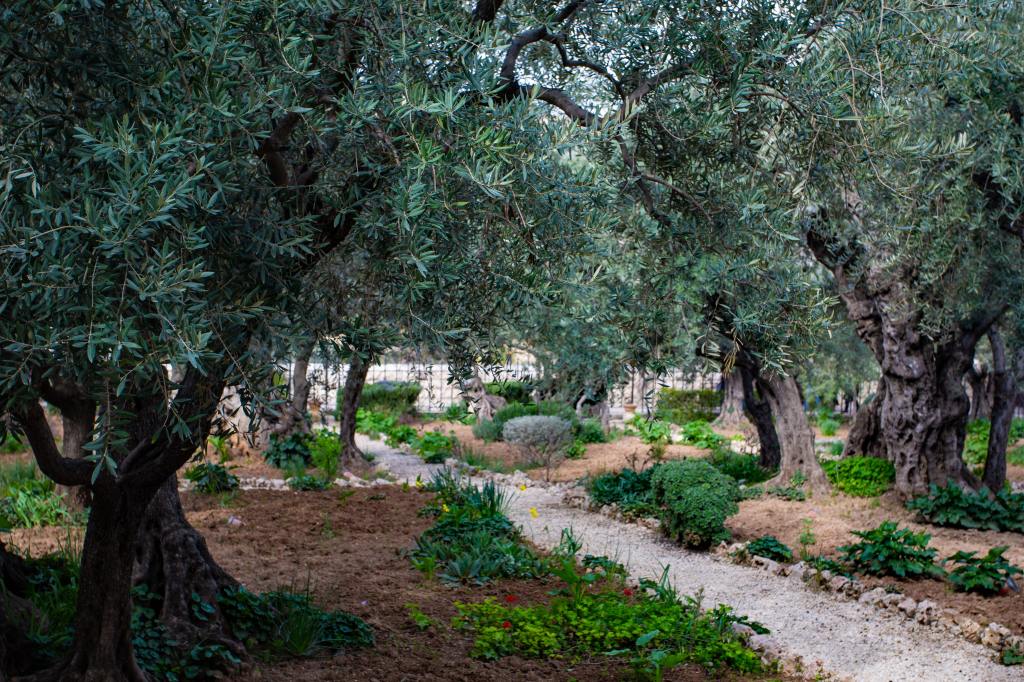
If you strapped on a pair of night vision goggles and parachuted into the Garden of Gethsemane during the night Jesus was betrayed, what would you most want to see?
I’d like to watch Jesus pray.
His soul was sorrowful, even until death, His life culminating in a gutting end to a marathon march.
The only thing worse than the fear of the unknown is knowing exactly what will happen to you, how it will happen, and why it has to happen.
Jesus lived His entire earthly life like this with others misunderstanding, distorting, or manipulating who He was.
At times, the disciples thought He would (or should) lead a righteous revolt against the Romans.
From Galilee to Judea, the townsfolk whose neighbors Jesus healed either wanted to crown Him king or stone Him unconscious, depending on the day.
The scribes, elders, Pharisees, and Sadducees saw him as a Johnny-come-lately, a usurper of the established order. Above all, they charged Him as a prince of demons and a blasphemer.
That’s why the following events came as no surprise to Jesus, making them all the more brutal:
Nazareth muttered in scorn.
“Isn’t this the son of Mary and Joseph, the carpenter?”
Judas opened up negotiations.
“What will you give me if I deliver him over to you?”
Peter promised.
“Even if I have to die with you, I will never disown you.”
Jesus still carried out His ministry under extreme duress, and He didn’t keep quiet about what His end would be, giving early notice to the disciples about His approaching death.
Those pressures would have crippled anyone else’s emotions and psyche.
It’s akin to running a marathon strapped into a vest bulging with Semtex plastic explosives, fully aware someone’s going to detonate them all at mile twenty-six, three paces from the finish line.
Despite all that broiling together in the Garden of Gethsemane, He produced some of the most treasured moments in Biblical history.
He washed the disciples’ feet, Judas included — the man who evaluated the Messiah’s market value at thirty pieces of silver.
He instituted the Last Supper.
He spoke the words that fill John 14-17, some of the most potent portions of Scripture you’ll ever read.
He told His disciples, “Where I am going, you cannot follow me now, but you will follow later.”
Thank God Almighty He went first on that path.
Surrounded by a dense grove of olive trees and eleven disciples scattered and swooning in troubled sleep, He prayed for you, too.
I do not ask for these only, but also for those who will believe in me through their word, that they may all be one, just as you, Father, are in me, and I in you, that they also may be in us, so that the world may believe that you have sent me.
Usually men crack because they can’t keep up the lies long enough to outlast the truth.
Jesus, on other hand, suffered an opposite fate. He lived the truth— and is the only Truth— in world that couldn’t help but destroy Him.
Many men and women might have said:
We appreciate the extra loaves and fish. We’ll also take the healings, thank you very much. But it’s better if you alone die for the nation than for us to lose our way of life, or at least what’s left of it.
That’s why I would choose to watch Him pray, if I could.
Had a doctor ordered bloodwork and a stress test for on Jesus that night, the results would have been frightening.
Picture it. Jesus’ breathing begins to shallow. His vision warps and narrows. Blood-soaked sweat seeps through His pores, drips off His nose, and dampens His cloak.
This was the plan all along. But now the raking whip, the splitting of His skin, and the blood canoeing through the wood of the cross call closer.
He could have called the twelve legions of angels and said, “It is finished,” with quite a different tone.
Instead, he received comfort as an angel ministered to Him. Not the kind of comfort that says, “It won’t be as bad as you think.” Instead He required the comfort that men like the renowned Italian General Guiseppe Garibaldi understood. He once reportedly said this to his soldiers:
I do not promise you ease. I do not promise you comfort. But I do promise you these hardships: weariness and suffering. And with them, I promise you victory.
To my knowledge, Garibaldi was no professing Christian, unfortunately. But his point still stands tall and sounds similar to someone else I know…
Foxes have holes, and birds of the air have nests, but the Son of Man has nowhere to lay his head.
Where I am going, you cannot follow me now, but you will follow later.
I have said these things to you, that in me you may have peace. In the world you will have tribulation. But take heart; I have overcome the world.
The fever of his final hours, the nerve-shredding pressure, the conniving of everyone plotting against Him — Jesus kept His composure through it all.
Next to His death and resurrection, those moments praying might have been the most critical seconds in the course of human history.
Reading about Jesus final night across the four Gospels, I wonder about some of the people whose lives He touched and what happened to them.
I think of the shepherds who worshipped Him at His manger.
I think of the magi who made the long trek, their only compass a glimmering star.
I think of the paralytic healed at the pool of Siloam, walking away after all those years.
I think of Zacchaeus, the one-time-racketeer changed forever.
I think of the demon-possessed man healed in a synagogue on the sabbath.
I think of the women with the flow of blood touching Jesus’ garment.
Did any of them live to mourn Jesus’ death and hear or celebrate news of His resurrection?
I sure hope so.
That would have been a glorious bookend to their place in Biblical history.
Who knows, maybe a few lived long enough to give their testimonies to one of the Gospel authors (if that’s how some of the stories were collected).
To bear the eternal cost of mankind’s sin, to make a public spectacle of satan, and to ziptie death forever, you need a praying savior making a momentous decision in the garden.
That would go through with all the suffering was always a cinch. But I admire Him all the more for locking eyes with that grim reality and living out the fatal role.
There’s just something about Jesus and gardens. To kick it into final gear, I’ll let the Apostle John take it from here and lead you to a more joyful day, with no night vision goggles or parachute required.
Having said this, she turned around and saw Jesus standing, but she did not know that it was Jesus.
Jesus said to her, “Woman, why are you weeping? Whom are you seeking?”
Supposing him to be the gardener, she said to him, “Sir, if you have carried him away, tell me where you have laid him, and I will take him away.”
Jesus said to her, “Mary.”
She turned and said to him in Aramaic, “Rabboni!”
Don’t look now, but you just went nose-to-nose with a moment in redemptive history.
Enjoyed this story from start to finish?
Get bonus stories once a month when you subscribe to my complimentary newsletter, Supply Line. Sign up here.
Kevin Cochrane is the creator of Replenish, the site to resupply your faith with overlooked insights from Scripture-based stories. Share your thoughts by commenting below or dropping a line to kevin@replenishstories.com.
 replenishstories.com